
Have you ever heard anyone end their prayer with anything other than, “Amen.” The word “Amen” is a Hebrew word that has been transliterated into most other languages. All that means is, it is spelled out in each language in such a way that it can be pronounced in the original way it was meant to be pronounced in Hebrew. Obviously, there’s a little bit of “potAto” vs. “pOtato”, where the “emPHasis falls on a different syllAble” (as my Dad used to say while deliberately emphasizing different vowels or blends in the word). Suffice it to say, the Christian or Hebrew, “Amen”, will mostly sound the same in a language. It is the same with the word, “Hallelujah”. No matter where you go in the world, Hallelujah means “praise YHWH/God” and sounds like, “Hallelujah.” The same is true of “Amen.” However, unlike Hallelujah, did you know that “Amen” can have at least three meanings?
Amen as,“So be it.”
The word “amen” often occurs in duplicate. For example, a scripture will not just say, “amen”, it will say, “amen, amen.” (See Psalm 41:13) Many modern translations (other than those that are word-for-word / formal translation style), translate the second occurrence of the word, “amen”, as “so be it.” This is why many Bible readers now understand “amen” to mean, “so be it.” However, in the original written language it says, “Amen, amen”, not “amen, so be it”. The addition of the definition, “so be it”, helps clarify for the reader a better sense of the urgency or emotion of the phrase, “amen, amen.” This happens often in translations because the translators want the Word of God to be as clear as possible for as many different readers as possible. (Did you know that almost all translations of the Bible are translated at a middle school to high school grade school level?! See footnote below.)
Amen as, “We agree / We witness / We testify.”
It’s a subtle difference, and often “so be it” means the same thing, but using “amen” to confirm an oath is another main use of “amen.” For example, in the Hebrew Bible (Old Testament), before Israel got its first king, the priests mediated disputes. Sometimes when the priest would give a decision on the case, the defendant would say, “Amen, Amen”. In essence, they were saying, “Yes, I agree” or “ Yes, I testify to the truth of that statement.” (See Numbers 5:22 for one example.) This can also be seen often in Deuteronomy where Moses is laying down the law, God’s law that is. When Moses states a law or precept that the people should agree to, he then directs them, “Then all the people shall say, ‘Amen!’” (See Deuteronomy 27:19).
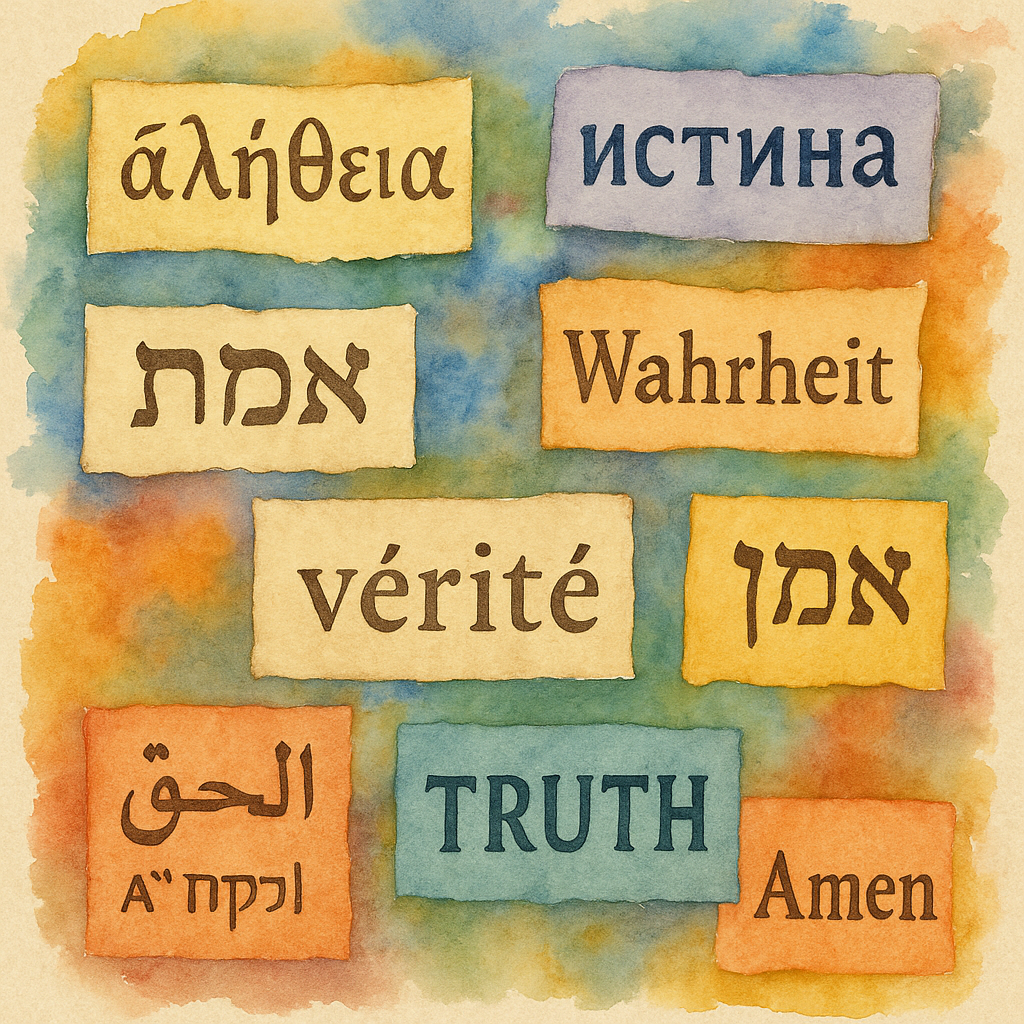
Amen as, “Truth”
The most fun discovery in the Bible is Jesus’s use of the phrase, “Amen.” Instead of placing it at the end, we find out from John the Apostle’s Gospel account that Jesus often led with the phrase, “Amen, amen.” Jesus’s usage is very significant and actually better reflects the word “truth” or “true”. This is why in many translations you will read Jesus saying, “Truly, truly I say to you…” The, “truly, truly”, is actually, “amen, amen,”! For Christians, this should add another dimension to our “Amen.” Amen is not just a statement of agreement or witnessing. Amen is a pledge of allegiance to the Truth. The Truth (Logos in Greek) is a person, and His name is Jesus!
Conclusion
The next time you pray, consider your prayers and ask yourself whether they are a reflection of “truth.” Can you end your prayers with, “truly, truly”? Can you start your prayers with, “truly, truly”? I think you can and should, if you are praying according to the Truth. Who is the Truth? Jesus Christ. This is why we often end our prayers with, “In the name of Jesus, Amen.” It’s like saying, “In the name of the Truth, Truth.” “By light we see light.” It’s only by the measurement of Truth that anything that is true can be known to be true. What if we began to invite Jesus at the start of our prayers to shine His truth through them? Amen, amen! Thank you Jesus for your light. Guide me by Holy Spirit, according to the will of the Father. In your name, Jesus, we pray. Amen, amen!
FOOTNOTES
Did you know that almost all translations of the Bible are translated at a grade school level?!
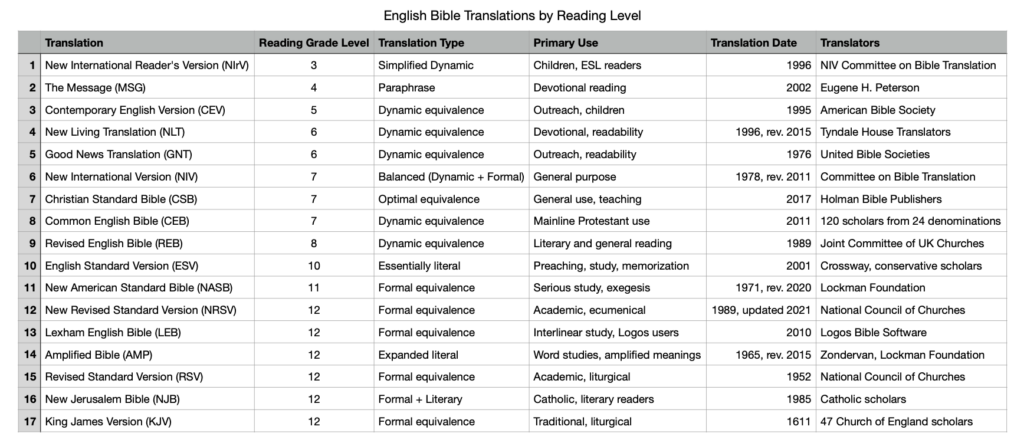
Some translations, like the NIV, are translated at a 7th grade level, meaning the words and sentence structure are made easy enough for a 7th grader to understand. Others, like New American Standard Bible, are closer to an 11th grade level. For more information on Bible translations according to U.S. grade equivalence, see the chart below. ALSO, this is one excellent reason you should study the Bible in the original written languages. Digging deeper leads to discoveries! And you don’t have to learn Ancient Hebrew or Ancient Greek. There are great tools that give you immediate access to the original Biblical text. I use “Logos” Bible software. There is an online version of Logos called “Biblia” that is great. “Bible Hub” and “Blue Letter Bible” are also online sites I have used extensively for going deeper into Bible study. I challenge you to dive into your favorite verse in the original language. You might discover an amazing nugget of gold that God has hidden there! “It is the glory of God to conceal a matter; to search out a matter is the glory of kings” (Proverbs 25:2). You are royalty, Child of God! Be royal!
English Bible Translation by Reading Level
This is not an exhaustive list of translations but will give you a good idea of U.S. English translations grade equivalence. You can download this chart here: English Bible Translation by Reading Level Chart Download